Cybersecurity Services
Most breaches at companies your size start with one convincing email, not some sophisticated attack.
What Cybersecurity Actually Has To Cover For Businesses Today...
Nobody breaks into a 30-person company with clever code. They send an email that looks like your bookkeeper, log in with a password somebody reused, or walk through a door that never locked. So we cover all three: the inbox, the network, and the building. Sophos Platinum handles endpoints, Microsoft 365 handles identity, and Verkada Gold covers cameras and access, all through one team.
What Our Cybersecurity Services Do For You
Phishing gets filtered before it reaches the person who would click.
Endpoints are monitored around the clock by Sophos Platinum tooling.
Logins require more than a password somebody reused back in 2019.
Doors, cameras, and badge readers answer to the same team as your network.
Suspicious activity is addressed by an engineer (not a dashboard) inside thirty minutes.
Gaps between your separate systems get found by us, not by somebody else.
When something does happen, the response plan already exists in writing.
What Clients Say About Us
Fast, Reliable Support Around the Clock
Working with ETS for about a year now, I've had a great experience every time I've contacted them for support and during our new product implementation. They have been flexible when needed and quickly responsive each time we've reached out for support. Employees are great to work with, very respectful and courteous, and at understanding our issue fully before providing possible solutions. I appreciate this company and their employees.

JOSH WRYE
A Trustworthy, Transparent Partner
I could not be happier with ETS. They are always just a phone call or e-mail away to handle our IT issues 24/7. Most of my tickets have been answered AND completed within an hour. Brian has gone above and beyond to make sure we understand our options and how they are going to be implemented. ETS has exceeded my expectations. No question or project is too small or too big for them. You may also think to yourself “Do I need an IT solution?” and the answer is YES and the company is ETS.

KATIE KASSING
Proactive IT Partnership That Exceeds Expectations
We have had the privilege of working with Empowering Technology Solutions for almost two years, and I can confidently say they have exceeded every expectation we had of a managed services partner. From the outset, they demonstrated a deep understanding of both our technical requirements and the strategic objectives of our business. Their team is consistently responsive, knowledgeable, and proactive. Whether it's day-to-day support requests, complex infrastructure projects, or critical incident response, they have delivered with professionalism and precision every step of the way. Their ability to translate technical challenges into actionable business solutions has been instrumental in reducing downtime, improving security posture, and increasing operational efficiency across our organization. What truly sets Empowering Technology Solutions apart is their commitment to partnership. They don’t operate as an outsourced vendor; they function as a true extension of our internal team. Their leadership maintains regular touchpoints with our executive staff, offering transparency, forward-thinking insights, and clear roadmaps for continuous improvement. This strategic engagement has enabled us to stay ahead of emerging technologies and regulatory requirements. In a landscape filled with reactive service providers, Empowering Technology Solutions is a rare find: a proactive, value-driven partner that consistently delivers excellence. I highly recommend them to any organization seeking a reliable, forward-thinking, and results-oriented IT MSP.

JOSEPH PROVENZANO
Responsive, Professional, and Reliable Support
Empowering Technology Solutions (ETS) has been an invaluable partner in managing the IT services for our multiple specialty clinics. Their team is consistently quick to respond, ensuring that any issues or concerns are addressed promptly and effectively. Their proactive approach to IT management has minimized downtime and enhanced the overall efficiency of our operations. What sets ETS apart is their unwavering commitment to providing tailored solutions that meet our specific needs. Whether it’s a complex network configuration or routine maintenance, ETS approaches each task with professionalism and expertise. Their knowledgeable staff are always ready to offer support, ensuring our IT infrastructure remains robust and reliable. The level of service provided by ETS goes beyond just meeting expectations; they consistently exceed them. Their ability to anticipate potential issues and implement preemptive measures has saved us time and resources. It's evident that ETS values our partnership and strives to deliver exceptional service at every opportunity. We highly recommend Empowering Technology Solutions to any organization seeking a responsive, innovative, and dedicated IT service provider. Their comprehensive approach to IT management and customer-centric focus make them a standout choice for any business looking to enhance their technological capabilities.

A A.
A Truly Dependable IT Company
We were lucky enough to find ETS years ago when our current IT company couldn't help us anymore. They are an amazing company with an amazing team. They are very organized and know their field. We have many different software programs that integrate with our main software, and we never have a major issue. It has been wonderful having a company that is so dependable, especially in the IT space where so many companies don't know what they are doing. We happily get to focus on our work rather than the latest IT issue. If you are looking for a company, give ETS a call, you will be so happy you do! :)

JUDY H
How We Close The Obvious Gaps For You
Attackers at this scale are opportunists, not specialists. They try the email, the password, and the door, then move on when all three hold. Most of our security work is making sure all three hold, then watching closely for what happens next.
We Start With Identity
Multi-factor authentication goes on every account, because a stolen password should never be enough on its own. Most of the attacks we see would have stopped at that single step.
We Filter Every Mailbox
Phishing and impersonation get caught before delivery. One of our published reviews is from a client noting how fast we spotted a phishing attempt, which is simply this job working correctly every single day.
We Watch Your Endpoints
Sophos Platinum monitoring runs on every machine, flagging any behavior that looks like ransomware starting up. An engineer reads those alerts, because an alert that nobody opens protects absolutely nobody.
We Cover The Building Too
Verkada Gold covers both cameras and door access under the same agreement. A server room that anybody can simply walk into is not secured by anything you installed on the network.


Email and Phishing Defense
The Attack That Arrives Looking Like Ordinary Business
Business email compromise doesn’t look like an attack. It looks like a supplier updating bank details, a director asking for a wire while travelling, or an invoice with the right logo and a slightly wrong domain. No malware is involved, so nothing gets blocked, and the money leaves before anybody notices. We filter what can be caught mechanically, add the authentication records to your domain, and tighten the Microsoft 365 settings that almost every tenant is still running on defaults.
One of our published client reviews is somebody noting how quickly we identified a phishing email. That is a small thing to put on a website, and it is also exactly the job. Phishing defense is not one product. It is filtering, authentication records on your domain, tenant settings that are wrong by default, and somebody looking at what still got through. Most of it stays invisible until it fails.
Filtering and impersonation checks run before delivery, so the obvious attempts never reach an inbox at all.
Your domain gets the authentication records that stop somebody else from sending mail that appears to be you.
Microsoft 365 tenant settings get tightened past the defaults, which most tenants are still quietly running on.
Endpoint and Network Protection
Somebody Actually Reads The Alerts, Not Just A Dashboard
Endpoint protection is where security spending usually goes first, and where it usually stops being useful. The software gets installed, the dashboard fills with alerts, and nobody has time to read them. Sophos Platinum gives us the tooling. The part that matters is that an engineer looks at what it flags and decides whether a machine behaving oddly at midnight is a failing update or the first ten minutes of a ransomware run. That decision cannot be automated away.
Ransomware rarely announces itself. It gets onto one machine, waits, works out where the file shares are, and then moves quickly. The window where it is still stoppable is measured in minutes, and it is nearly always visible in endpoint behavior first. Monitoring only helps if somebody is watching during the hours when this usually happens, which is not the working day and rarely a weekday.
Sophos Platinum monitoring runs on every managed machine and flags behavior consistent with ransomware starting up.
Alerts reach an engineer who makes a decision, rather than accumulating in a console nobody has opened.
Isolating one compromised machine early is the difference between a bad afternoon and a fully rebuilt network.
Physical Security and Access Control
A Server Room That Anybody Can Walk Into Is Not Secure
This is the part most IT companies decline. Cameras and door access get handed to a low voltage subcontractor who installs the hardware, invoices, and is never heard from again. Nobody patches the recorder, nobody removes the badge belonging to somebody who left in 2022, and nobody notices the camera system sitting on the same flat network as your accounting server. We hold Verkada Gold, so access control sits in the same agreement and the same documentation as everything else.
For construction and trades this matters more than it does for an office. A yard, a trailer, a container full of tooling, and a rotating crew with keys is a security problem that no firewall touches. The same is true of a clinic where the server sits in a room off the waiting area. Physical and digital access are the same question asked twice, and here they get answered by one team.
Verkada Gold covers cameras and door access inside the same agreement that covers your network security.
Badge and credential removal happens the day somebody leaves, alongside closing down their system accounts.
Camera and access hardware gets patched and kept off your main network, rather than quietly bridging both.
Why Businesses Stop Splitting Their Security Up
Security gets bought reactively, one product at a time, usually after something went wrong or an insurer asked a hard question. What that leaves behind is four vendors, three dashboards, and no single person who can tell you where you actually stand.
One Company, No Seams
Identity, email, endpoints, and physical access are handled by one company holding vendor tiers in all four areas, so the seams between them belong to somebody. Most breaches at this scale happen in exactly those seams.
Alerts Get Read
Alerts are actively monitored by an engineer rather than accumulating on a dashboard nobody opens. An alert that nobody ever investigates offers exactly the same protection as no monitoring at all, at considerably greater expense to you.
The Plan Exists First
Your incident response plan is written before you need it, naming who gets called, what gets isolated first, and which regulator or insurer has to be notified. Improvising all that during an actual incident goes badly.
Alerts Get Answered
White glove security means an alert reaches an actual person inside thirty minutes rather than resting quietly on a dashboard. Every security ticket here gets surveyed on close like any other, and the score publishes unedited.
FAQs About Our Cybersecurity Services
What Happens In The First Hour After You Detect A Real Intrusion?
Containment comes before investigation, which in practice means isolating the affected machines from everything else before working out what happened. Your ticket reaches an engineer inside thirty minutes, and the sequence and the phone numbers are written into your response plan during onboarding rather than decided live, because the first hour is exactly when nobody thinks clearly. That plan names who at your company gets called, which systems come off the network first, and whether an insurer, a regulator, or a client under contract has to be notified. What it will not contain is a promised containment time, because that depends on what you are running and how the intrusion arrived.
Does Cyber Insurance Require Any Of This Before They Will Pay Out?
Increasingly, yes, and the questionnaires have become far more specific over the last few years. Carriers now commonly ask whether multi-factor authentication is enforced on email and remote access, whether endpoint detection is deployed, whether backups are kept offline, and whether you run awareness training. Answering optimistically is a real risk, because a claim can be reduced or refused when the control you attested to was not actually in place. Send us the questionnaire before you fill it in and we will mark every answer your current setup can honestly stand behind.
Will Multi-Factor Authentication Slow Down Staff Who Already Resist Any New Systems?
Less than people expect, and the resistance usually comes from how it is rolled out rather than from the thing itself. Configured properly, most staff approve a prompt on their phone once and then are not asked again on that device for weeks. The friction people remember comes from setups that prompt on every login, or that go live on a Monday with no warning. Where it genuinely gets awkward is shared machines and field staff without company phones, and those cases are worth working through individually before anything is switched on.
Do You Cover Security For Staff Who Work From Remote Job Sites?
Yes, and it is a different problem from securing an office. A laptop that lives in a truck, connects through whatever network is available, and gets shared between crew members needs its protection to travel with the device rather than sitting at an office firewall. That means endpoint monitoring, disk encryption, and identity controls that work the same way on site as they do at your desk. Physical loss is the more common event for field staff, so the practical question is usually what happens when a device disappears, not whether somebody attacked it.
You Deserve A Higher Quality of IT Support...
Most owners find out how thin their security was on the day it fails, and how slow their IT company is on the same day. You can find out now instead, on a call that costs nothing, from somebody who will say it plainly.
Call (702) 874-3767 today or click the button below to see firsthand what white-glove IT services look like.

Our Offices
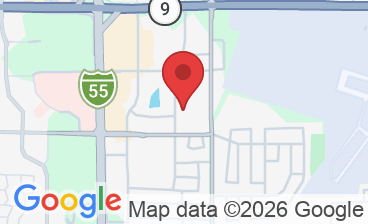
Headquarters: 131 N Williamsburg Dr. Bloomington, IL 61704
Tacoma, WA: 748 Market St #203, Tacoma, WA 98402, United States
Las Vegas, NV: 2300 W Sahara Ave Ste 800, Las Vegas, NV 89102, United States