Small Business IT Support
Nothing at all is forcing you to sort out your IT, which is exactly why it never gets sorted out.
Nothing Is Actually Making You Deal With This
A clinic has HIPAA. A defense contractor has CMMC. You have nobody scheduled to come and check, so the shared drive stays a mess and the server stays in the cupboard.
That is not negligence, it is priorities. IT never wins against a customer, a hire, or a deadline. So it waits until the day it stops being optional, which is rarely convenient.
What Our Small Business IT Services Do For You
Somebody finally owns your IT, and it is not your office manager.
You get a written picture of what you actually own and pay for.
Adding five people stops being a week of somebody chasing accounts.
We answer your requests for support in thirty minutes or less.
The insurance renewal questionnaire has answers you can defend.
Nothing important lives only inside the head of one single person.
Your help desk answers, and knows your setup before you explain.
Why Our Clients Trust Us
Fast, Reliable Support Around the Clock
Working with ETS for about a year now, I've had a great experience every time I've contacted them for support and during our new product implementation. They have been flexible when needed and quickly responsive each time we've reached out for support. Employees are great to work with, very respectful and courteous, and at understanding our issue fully before providing possible solutions. I appreciate this company and their employees.

JOSH WRYE
A Trustworthy, Transparent Partner
I could not be happier with ETS. They are always just a phone call or e-mail away to handle our IT issues 24/7. Most of my tickets have been answered AND completed within an hour. Brian has gone above and beyond to make sure we understand our options and how they are going to be implemented. ETS has exceeded my expectations. No question or project is too small or too big for them. You may also think to yourself “Do I need an IT solution?” and the answer is YES and the company is ETS.

KATIE KASSING
Proactive IT Partnership That Exceeds Expectations
We have had the privilege of working with Empowering Technology Solutions for almost two years, and I can confidently say they have exceeded every expectation we had of a managed services partner. From the outset, they demonstrated a deep understanding of both our technical requirements and the strategic objectives of our business. Their team is consistently responsive, knowledgeable, and proactive. Whether it's day-to-day support requests, complex infrastructure projects, or critical incident response, they have delivered with professionalism and precision every step of the way. Their ability to translate technical challenges into actionable business solutions has been instrumental in reducing downtime, improving security posture, and increasing operational efficiency across our organization. What truly sets Empowering Technology Solutions apart is their commitment to partnership. They don’t operate as an outsourced vendor; they function as a true extension of our internal team. Their leadership maintains regular touchpoints with our executive staff, offering transparency, forward-thinking insights, and clear roadmaps for continuous improvement. This strategic engagement has enabled us to stay ahead of emerging technologies and regulatory requirements. In a landscape filled with reactive service providers, Empowering Technology Solutions is a rare find: a proactive, value-driven partner that consistently delivers excellence. I highly recommend them to any organization seeking a reliable, forward-thinking, and results-oriented IT MSP.

JOSEPH PROVENZANO
Responsive, Professional, and Reliable Support
Empowering Technology Solutions (ETS) has been an invaluable partner in managing the IT services for our multiple specialty clinics. Their team is consistently quick to respond, ensuring that any issues or concerns are addressed promptly and effectively. Their proactive approach to IT management has minimized downtime and enhanced the overall efficiency of our operations. What sets ETS apart is their unwavering commitment to providing tailored solutions that meet our specific needs. Whether it’s a complex network configuration or routine maintenance, ETS approaches each task with professionalism and expertise. Their knowledgeable staff are always ready to offer support, ensuring our IT infrastructure remains robust and reliable. The level of service provided by ETS goes beyond just meeting expectations; they consistently exceed them. Their ability to anticipate potential issues and implement preemptive measures has saved us time and resources. It's evident that ETS values our partnership and strives to deliver exceptional service at every opportunity. We highly recommend Empowering Technology Solutions to any organization seeking a responsive, innovative, and dedicated IT service provider. Their comprehensive approach to IT management and customer-centric focus make them a standout choice for any business looking to enhance their technological capabilities.

A A.
A Truly Dependable IT Company
We were lucky enough to find ETS years ago when our current IT company couldn't help us anymore. They are an amazing company with an amazing team. They are very organized and know their field. We have many different software programs that integrate with our main software, and we never have a major issue. It has been wonderful having a company that is so dependable, especially in the IT space where so many companies don't know what they are doing. We happily get to focus on our work rather than the latest IT issue. If you are looking for a company, give ETS a call, you will be so happy you do! :)

JUDY H
How We Take This Off The List For You
Most of what we do for a growing company is unglamorous. Find out what exists, write it down, fix the things that are one bad day away from being expensive, then handle the ordinary volume so nobody in your office is doing IT as a second job.
Somebody Finally Owns It
The most common arrangement we replace is an office manager doing IT on top of a real job. That works right up until it does not, and it never scales upward without creating more operational strain.
We Find Out What Exists
First job is an inventory: devices, licenses, vendors, passwords, and where every single file category lives. Most companies have never had that document, and every later decision depends on it.
The Cheap Fixes Come First
Some things sit one bad day from expensive: an untested backup, a shared password, an account belonging to somebody who left. Those get closed early because they cost almost nothing.
Growth Stops Hurting You
Hiring five people should not consume a week for a staff member, chasing laptops and logins, getting everything ready. New hire setup is the ticket type our own published surveys mention more than any other.


Managed IT for Companies Without An IT Person
Because Right Now It Is Somebody's Second Job Entirely
In most companies your size, IT belongs to whoever was least unwilling. An office manager who is good with computers, a bookkeeper who set up the email years ago, or the owner at nine on a Sunday evening. They are usually doing a reasonable job, and that is not the problem. The problem is that it is not their actual job, nothing gets documented, and when they hand in their notice the company discovers how much only they knew.
Taking it over means taking the whole thing rather than being an escalation line. The help desk, the patching, the backups, the vendor calls, the new starters, and the documentation. What your office manager gets back is their afternoons, and what you get is a company where the knowledge is written down rather than resident in one person.
The whole environment gets taken over, rather than only the problems nobody else could fix.
Your office manager gets their real job back, along with most of their afternoons.
Vendor calls become ours, from the internet provider through to the accounting software.
Environment Discovery and Documentation
Finding Out What You Actually Own And Pay For Monthly
Almost nobody can answer three basic questions: what devices do we have, what are we paying for every month, and where does each kind of file actually live. Not because anybody was careless, but because the answer was never written down and the environment grew one urgent decision at a time. So the first thing we do is find out. Devices, licenses, subscriptions, vendors, renewal dates, who has access to what, and which systems you cannot run without.
This is the least exciting part of the work and the part everything else depends on. It regularly pays for itself immediately, because most companies find subscriptions for people who left and licenses at a tier nobody needed. It also means that from then on, a question about your own environment has an answer rather than an investigation attached.
Devices, licenses, subscriptions, vendors, and renewal dates all end up in one document.
Subscriptions for departed staff and unnecessary license tiers usually surface immediately.
From then on, a question about your own setup has an answer rather than an investigation.
Onboarding and Growth Support
Hiring Five People Without Losing A Week Of Somebody's Time
Growth is where improvised IT shows its limits most clearly. Hiring one person is a mild nuisance. Hiring five in a month, or opening a second location, turns into somebody in the office spending a week chasing laptops, licenses, logins, and a phone that was supposed to arrive Tuesday. Then somebody leaves and the reverse happens badly, or more often does not happen at all, which is how you pay for accounts belonging to people long gone.
Onboarding is the most frequently praised ticket type across four years of our published surveys, which is a small thing to notice and a fair indicator of where we put the effort. A new starter should arrive to a working laptop, their accounts, and access to the systems their job needs, without three follow-ups from your office.
New starters arrive to a working laptop, their accounts, and the access their job needs.
Departures close the accounts and free the licenses on the day, not at month end.
Opening a second location becomes a planned setup rather than an improvised scramble.
Why Growing Companies Trust Us With Their IT
The improvised version works for a lot longer than people expect, which is precisely the trap. There is no single moment where it obviously fails, just a slow accumulation of things only one person understands and nobody has ever written down.
It Stops Being Yours
The arrangement being replaced is usually an office manager or a bookkeeper handling IT alongside a real job. It works for longer than anybody expects, and then it stops working at precisely the worst possible moment.
Same Service, Any Size
We do not reserve our white-glove support for the larger businesses we work with. The same thirty minute response, the same surveys, and the same roadmap apply whether you employ five people or fifty.
Cheap Risks Close First
The cheap risks get closed early, because an untested backup or an account belonging to somebody who left back in 2023 costs almost nothing to fix and a great deal to discover it the hard way.
Hiring Gets Easier
Hiring stops being a week of somebody chasing laptops and logins. New hire setup is the single most praised ticket type across four years of our own published surveys, which is where we put the effort.
FAQs About Our IT Services for Small Businesses
We Only Have Fifteen Staff. Are We Really Too Small For This?
No, and fifteen is roughly where the improvised arrangement starts costing more than it saves. Below about ten people, one capable person genuinely can hold it together. Somewhere past that, the volume of small requests starts eating real hours, the number of accounts and devices exceeds what anybody remembers, and the consequences of a failure stop being trivial. The useful test is not headcount but whether anybody could answer, today, what you own and what you pay for monthly.
What Happens To The Person Currently Doing Our IT On The Side?
They usually get their actual job back, which in our experience is received well rather than badly. The pattern we see most is relief, because nobody wants to be the person interrupted every time a printer stops working. If they enjoy the technical side and want to keep part of it, that is a co-managed arrangement rather than a full one, and the split gets written down so neither side is guessing. What we do not do is arrive and make the existing person look incompetent.
Our Previous Provider Left No Documentation. Where Exactly Does That Leave Us?
That is a common position, and it is the first thing we fix rather than a reason to walk away. It does mean the discovery work takes longer and costs more than it would with a clean handover, so it is worth asking your outgoing provider for the asset list, the admin credentials, and the licensing details in writing before the relationship ends. Whatever arrives, we rebuild the picture from the environment itself, which is slower but does not depend on anybody's cooperation.
Do We Need All This If Nothing Has Actually Gone Wrong Yet?
That is the honest question and it deserves a straight answer: some of it, not all of it. An untested backup, an account belonging to somebody who left, and a password three people share are worth closing now because they cost very little and they are how ordinary weeks turn expensive. A full replacement of things that are working is usually not urgent. The right starting point is finding out what you have, which is cheap, and then deciding what is actually worth doing.
You Deserve A Higher Quality of IT Support...
Most owners find out how thin their security was on the day it fails, and how slow their IT company is on the same day. You can find out now instead, on a call that costs nothing, from somebody who will say it plainly.
Call (702) 874-3767 today or click the button below to see firsthand what white-glove IT services look like.
Client Support
Sales Inquiries
Our Offices
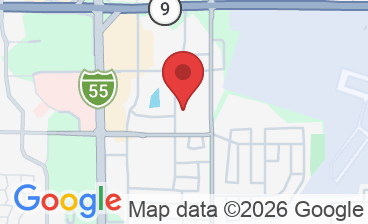
Headquarters: 131 N Williamsburg Dr. Bloomington, IL 61704
Tacoma, WA: 748 Market St #203, Tacoma, WA 98402, United States
Las Vegas, NV: 2300 W Sahara Ave Ste 800, Las Vegas, NV 89102, United States